

वासुदेवेऽपीति चेन्नाकारमात्रत्वात्॥ ५२॥
Vāsudeve’pi iti chet nākāramātratvāt
(“Even though the Lord appeared as Vāsudeva, He is not merely a material being.”)
वासुदेवेऽपि (Vāsudeve’pi): “Even in Vāsudeva…” (Vāsudeva refers to Lord Krishna/Ram/Vishnu, etc., the divine personality).
इति चेत् (Iti chet): “If it is argued that…” (This introduces a potential doubt or question).
न (Na): “No.” (A straightforward rejection of the doubt).
आकारमात्रत्वात् (Ākāra-mātratvāt): “Because He is not merely limited to a form.”
Put simply: “If someone argues that the same spiritual limitation applies even to worshipping Vāsudeva (Krishna), the answer is no, because He is not merely confined to a physical form.”
The Question That Needs Answering
Imagine you’re learning about devotion and someone tells you: “Focus all your love on the Supreme Divine Reality.” You’re inspired and ready to commit yourself fully.
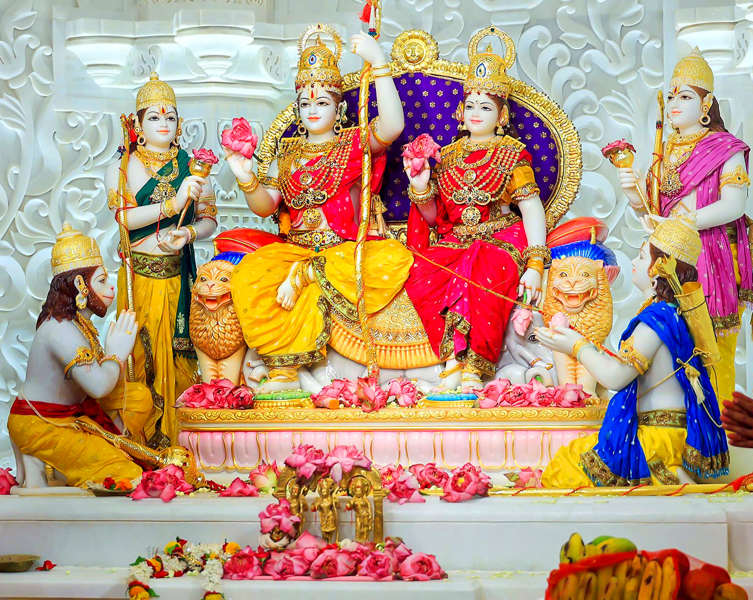
Then you study Shri Ram’s life and notice something puzzling: He ruled the kingdom of Ayodhya. He was a prince, then a king. He went to war, formed alliances, and dealt with court politics. He faced exile, loss, and what appeared to be human suffering. He seemed to live much like any noble ruler of his time.
A natural doubt arises: “Wait, if Ram lived like a king, fought battles, experienced what looked like pain and separation, and had a physical body just like everyone else, why should I worship him as God? Isn’t he just a great historical figure? A perfect ruler, perhaps, or an ideal man, but not the Supreme Being himself?”
This sutra exists specifically to address this confusion.
The Core Answer
The response is straightforward but profound: Yes, Lord Ram lived in the world, but his essential nature was completely different from that of ordinary beings, including the greatest kings, saints, or sages.
Think of it this way: Two people might both wear similar royal robes and sit on similar thrones, but one could be the creator of the entire kingdom choosing to experience it from within, while the other is genuinely bound by the rules and limitations of kingship. The external appearance is similar, but the reality is vastly different.
Similarly, Shri Ram appeared to live within human limitations, but this was a voluntary choice, not an actual constraint. His true identity remained divine, unlimited, and supremely pure throughout his entire earthly life.
ॐ यो ह वै श्रीरामचन्द्रः स भगवान् यः ॐ नमो भगवते वासुदेवाय
यो महाविष्णुः भूर्भुवः सुवस्तस्मै वै नमो नमः ॥ ४४ ॥
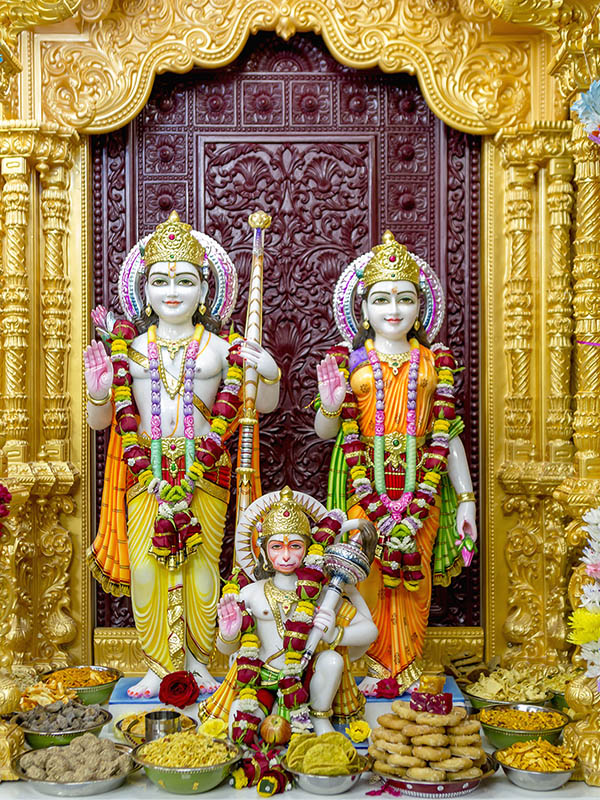
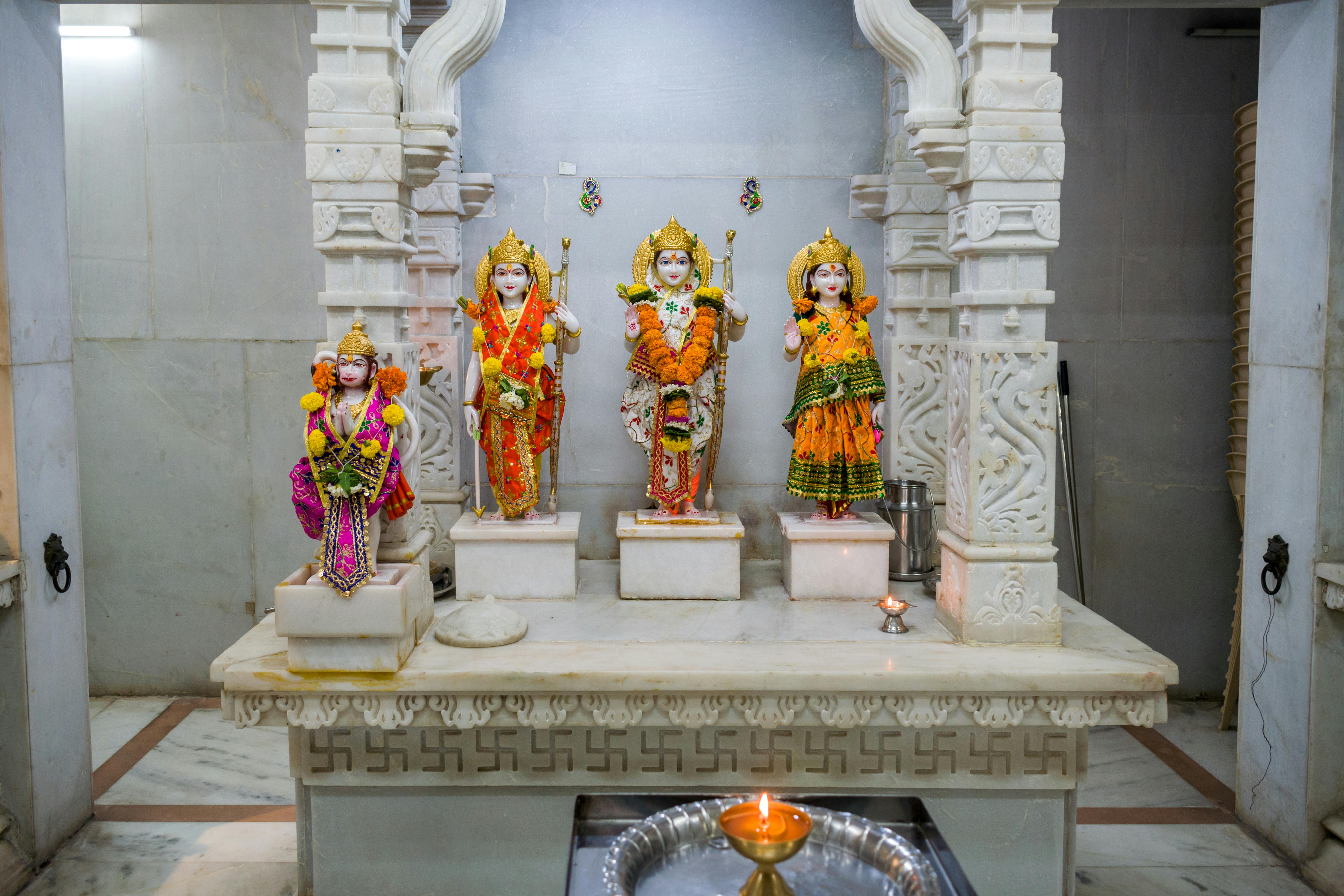
I offer my respectful obeisances unto the Supreme Personality of Godhead, Vāsudeva, who is the Supreme Personality of Godhead, Lord Rāmacandra.
(Shri Ramatapini Upanishad)
Bhagavān Appearing as “Devakī’s Son” Is Līlā, Not Limitation
A human child is born with:
- karma
- ignorance
- need
- fear
But when Kṛṣṇa appears as a child, His form is:
- eternal (nitya),
- fully conscious (cinmaya),
- autonomous (svatantra),
- non-material (aprakṛta).
Even His infancy is divine play.
कृष्णस्तु भगवान् स्वयं — “Kṛṣṇa is Bhagavān Himself.”
(Bhāgavat 1.3.28)
Why Rām & Kṛṣṇa Are Not ‘Just Kings’ or ‘Just Men’
Let’s compare ordinary beings (even extraordinary ones like great emperors or sages) with the Divine incarnate:
Any human being, no matter how great:
- Is born through biological processes they don’t control
- Has a body subject to aging, disease, hunger, and eventual death
- They possess limited knowledge; they can’t know everything
- They have limited power; they can’t do everything
- Creates karma through their actions, which binds them to consequences
- Exists within time and space, moving from past through present to future
- Experiences genuine suffering when facing loss or difficulty
Vasudev:
- Chose to appear, fully conscious and intentional about taking birth
- Had what appeared to be a body, but it was made of consciousness itself, not ordinary matter
- Possessed complete knowledge of past, present, and future (though he often chose not to display it)
- Had unlimited power but chose when and how to reveal it (like breaking Shiva’s bow)
- It was beyond karma; His actions created no binding consequences for himself
- Existed beyond time while appearing to act within it
- What appeared as his suffering was actually divine lila (play), not genuine limitation
A Helpful Analogy
Think of a master director who decides to act in their own film. They step into the role, speak the lines, appear to struggle with challenges. An audience member might think, “This character is truly suffering, truly limited.”
But that’s not the complete picture. The director knows the entire script, controls the production, and can step out of the role at any moment. The appearance in the role doesn’t represent a constraint on their creative power or knowledge.
Similarly, Lord wore the “role” of a human prince and king to participate in the world’s story, but could transcend it at will. His appearance in human form didn’t constrain his divine nature; it was a conscious choice to make the divine accessible.
Living Verification
But beyond textual testimony, there’s the verification of experience. Millions of devotees across centuries have found that relating to Bhagwan as the Supreme transforms their lives, brings them to enlightenment, and grants them direct mystical experience.
Saints like Tulsidas experienced Shri Ram directly, not as a historical memory but as a living presence. The eternal devotion to Ram demonstrates the ongoing reality of this relationship, not bound by time, not limited to history, but alive in the present.
If Ram/Krishna were merely a great historical ruler, such a transformation wouldn’t be possible across millennia. The living spiritual results verify what the texts declare.
The Sūtra advises devotion to Vāsudev; it is guiding the seeker to look past the historical figure and fix their mind on the Supreme, All-Pervading Lord who chose to reveal Himself in that particular form for the welfare of the world.
The worship offered to the Shri Bhawan is thus not directed at a king or a limited Vibhūti, but at the unlimited source of all existence, making Him the most fitting of Bhakti (supreme, unqualified devotion).