
In the timeless epic of the Ramayana, when Vibhishan, brother of the demon king Ravan, crosses the ocean to seek refuge at the feet of Shri Ram. This episode is not merely a turning point in the narrative; it is a profound teaching on divine compassion, the nature of true surrender, and the boundless mercy of the Supreme Lord.
As Vibhishan swiftly crossed the ocean with sincere devotion in his heart, the monkey warriors spotted him approaching their camp. Naturally suspicious, they immediately assumed he was a spy sent by the enemy:
ऐहि बिधि करत सप्रेम बिचारा। आयउ सपदि सिंदु एहिं पारा॥
कपिन्ह बिभीषनु आवत देखा। जाना कोउ रिपु दूत बिसेषा॥Ehi bidhi karat saprem bichārā, āyau sapadi sindhu ehin pārā.
Kapinh bibhīṣanu āvat dekhā, jānā kou ripu dūta biseṣā.Thinking fondly of many sincere feelings, Vibhishan hurriedly crossed the ocean to the place where Shri Ram and His army were located. The monkeys, upon seeing Vibhishan, considered him a special envoy of the enemy.
The monkeys detained Vibhishan and hurried to Sugriv, who promptly reported the matter to Shri Ram. It was a moment that would test the very principles upon which dharma stands.
Sugriv, ever the prudent king, advised caution. His concern was valid from a strategic standpoint:
भेद हमार लेन सठ आवा। राखिअ बाँधि मोहि अस भावा॥
सखा नीति तुम्ह नीकि बिचारी। मम पन सरनागत भयहारी॥Bhed hamār len saṭh āvā, rākhia bāndhi mohi asa bhāvā.
Sakhā nīti tumh nīki bichārī, mama pana saranāgat bhayahārī.“It looks like this miserable individual has come to watch us. I would be happy if he were apprehended and held in custody. Shri Ram said, “You have provided good advice on political strategies, but I have made a promise to reduce the fears of those who turn to me.”
Here we witness the beautiful interplay between worldly wisdom and divine principle. Shri Ram acknowledges Sugriv’s political acumen, yet gently reminds him of a higher truth, the sacred vow to protect all who seek refuge.
What follows is one of the most powerful declarations in all of scripture. Shri Ram articulates His unwavering commitment to those who surrender:
सरनागत कहुँ जे तजहिं निज अनहित अनुमानि।
ते नर पावँर पापमय तिन्हहि बिलोकत हानि॥Saranāgat kahun je tajhin nija anahita anumāni,
Te nara pāvanra pāpamaya tinhi bilokata hāni.“(Shri Ramji then said-) Those people who, anticipating their own harm, abandon those who come to them for shelter, are mean, sinful; even looking at them is a sin.”
The Lord continues with words that echo through eternity:
कोटि बिप्र बध लागहिं जाहू। आएँ सरन तजउँ नहिं ताहू॥
सनमुख होइ जीव मोहि जबहीं। जन्म कोटि अघ नासहिं तबहीं॥Koṭi bipra badha lāgahin jāhū, āen sarana tajauṁ nahin tāhū.
Sanamukha hoi jīva mohi jabahin, janma koṭi agha nāsahin tabahin.” Even if someone is guilty of killing millions of Brahmins, I do not abandon him if he comes to me for refuge. The moment a soul comes before me, the sins of millions of lifetimes are destroyed. “
This is not mere poetry; it is the very foundation of divine grace. The Lord’s mercy is not conditional upon our past; it depends entirely on the sincerity of our present surrender.
Shri Ram then reveals something profound about the nature of devotion:
पापवंत कर सहज सुभाऊ। भजनु मोर तेहि भाव न काऊ॥
जौं पै दुष्ट हृदय सोइ होई। मोरें सनमुख आव कि सोई॥Pāpavanta kara sahaja subhāū, bhajanu mora tehi bhāva na kāū.
Jauṁ pai duṣṭa hṛdaya soi hoī, moreṁ sanamukha āva ki soī.“The inherent nature of a sinner is that my devotion does not please him. If he (Ravana’s brother) were genuinely wicked, would he have come to me?”
This is a crucial teaching: the truly corrupt cannot even approach the divine. The very act of seeking God with sincere devotion is itself proof of an awakened conscience. And even if political motives were involved, the Lord declares:
भेद लेन पठवा दससीसा। तबहुँ न कछु भय हानि कपीसा॥
Bheda lena paṭhavā dasasīsā, tabahun na kachu bhaya hāni kapīsā.
“Even if Ravana has sent him to gather secrets, O Sugreeva, there is no fear or harm to you.”
जग महुँ सखा निसाचर जेते। लछिमनु हनइ निमिष महुँ तेते॥
Jaga mahun sakhā nisāchara jete, lachimanu hanai nimiṣa mahun tete.“Because, O friend, Lakshmana can kill all the demons in the world in a moment.”
With divine confidence, Shri Ram sends forth His command:
उभय भाँति तेहि आनहु हँसि कह कृपानिकेत।
जय कृपाल कहि कपि चले अंगद हनू समेत॥Ubhaya bhānti tehi ānahu hansi kaha kṛpāniketa,
Jaya kṛpāla kahi kapi chale angada hanū sameta.“Lord Rama, the abode of mercy, smiled and said, “Bring him in either case.” Then Sugreeva, accompanied by Angada and Hanuman, departed, chanting, “Victory to the Lord Rama!”
As Vibhishan approached the Lord, he beheld a sight that stopped time itself:
बहुरि राम छबिधाम बिलोकी। रहेउ ठटुकि एकटक पल रोकी॥
भुज प्रलंब कंजारुन लोचन। स्यामल गात प्रनत भय मोचन॥Bahuri rāma chabidhāma bilokī, raheu ṭhaṭuki ekaṭaka pala rokī.
Bhuja pralamba kanjaruna lochana, syāmala gāta pranata bhaya mochana.“Then, beholding the abode of splendor, Shri Rama, he stopped blinking and gazed in stunned silence. The Lord has large arms, eyes like red lotuses, and a dark complexion that dispels the fear of those who surrender.”
In this moment of divine darshan, Vibhishan’s entire being transformed. His eyes filled with tears of devotion, his body quivered with spiritual ecstasy. Gathering his composure, he spoke with profound humility:
नाथ दसानन कर मैं भ्राता। निसिचर बंस जनम सुरत्राता॥
सहज पापप्रिय तामस देहा। जथा उलूकहि तम पर नेहा॥Nātha dasānana kara main bhrātā, nisichara bansa janama suratrātā.
Sahaja pāpapriya tāmasa dehā, jathā ulūkahi tama para nehā.“O Lord! I am the brother of the ten-headed Ravana. O protector of the gods! I was born in a clan of demons. I have a tamasic body(the inferior modes of nature), and by nature I love sin, just as an owl naturally loves darkness.”
Then came his heartfelt plea:
श्रवन सुजसु सुनि आयउँ प्रभु भंजन भव भीर।
त्राहि त्राहि आरति हरन सरन सुखद रघुबीर॥Śravana sujasu suni āyauṁ prabhu bhanjana bhava bhīra,
Trāhi trāhi ārati harana sarana sukhada raghubīra.“Having heard of Your esteemed name, I have come to You with deep faith that You are the One who eases the fear of life and death. Help me, protect me, O’ Raghuveer, the one who soothes all sorrows and brings joy to those who turn to You.”
What happened next exemplifies the very essence of divine love:
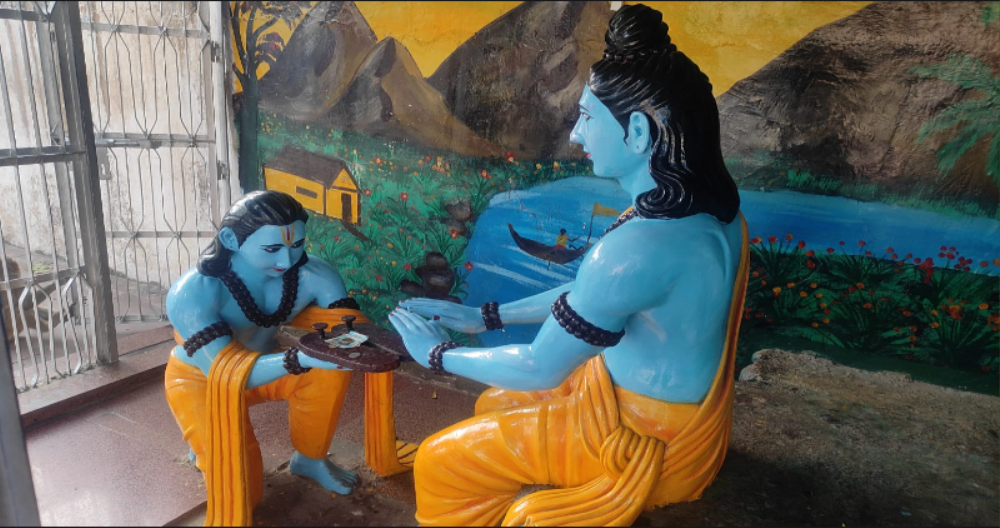
अस कहि करत दंडवत देखा। तुरत उठे प्रभु हरष बिसेषा॥
दीन बचन सुनि प्रभु मन भावा। भुज बिसाल गहि हृदयँ लगावा॥Asa kahi karata daṇḍavata dekhā, turata uṭhe prabhu haraṣa biseṣā.
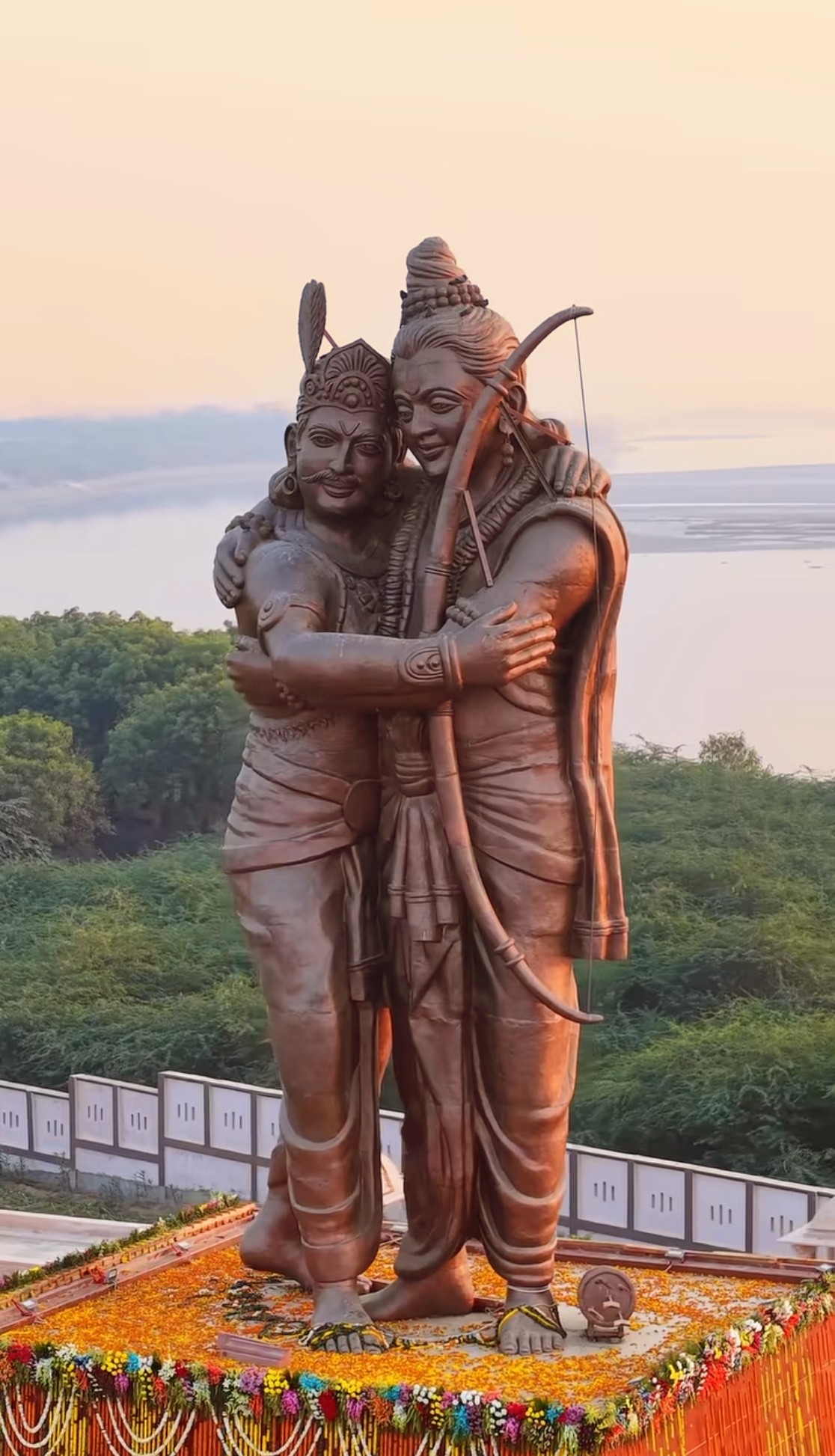
Dīna bachana suni prabhu mana bhāvā, bhuja bisāla gahi hṛdayaṁ lagāvā.“After Vibhishan finished his speech and prostrated before Him, the Lord, full of joy, stepped forward and swiftly lifted him. Shri Ram’s heart was filled with great delight at Vibhishan’s honest and humble words, and He lovingly embraced Vibhishan with His long, graceful arms.“
The Supreme Lord Himself rejoices when a soul surrenders! He doesn’t merely accept the devotee, He embraces them with pure love.
After seating Vibhishan beside Him, Shri Ram speaks with the tender concern of a friend:
कहु लंकेस सहित परिवारा। कुसल कुठाहर बास तुम्हारा॥
Kahu lankeśa sahita parivārā, kuśala kuṭhāhara bāsa tumhārā.
” O’ King of Lanka, please tell me, how is your family? You reside in a an unholy place……“
खल मंडली बसहु दिनु राती। सखा धरम निबहइ केहि भाँती॥
Khala maṇḍalī basahu dinu rātī, sakhā dharama nibahai kehi bhāntī.“…Being surrounded by the immoral day and night, my friend, how do you stay righteous?“
The Lord adds a profound truth about the company we keep:
बरु भल बास नरक कर ताता। दुष्ट संग जनि देइ बिधाता॥
Baru bhala bāsa naraka kara tātā, duṣṭa sanga jani dei bidhātā.
“Oh dear one, it is much better to be in hell than to be with the wicked; may the Creator never allow anyone to have such company.”
Vibhishan’s response becomes a universal teaching for all spiritual seekers:
तब लगि कुसल न जीव कहुँ सपनेहुँ मन बिश्राम।
जब लगि भजत न राम कहुँ सोक धाम तजि काम॥Taba lagi kuśala na jīva kahuṁ sapanehuṁ mana biśrāma,
Jaba lagi bhajata na rāma kahuṁ soka dhāma taji kāma.“A person cannot achieve true well-being or even a moment of peace in their mind, not even in dreams, until they give up lust and worldly desires, which are the source of sorrow, and dedicate themselves to the worship of Shri Ram.”
He elaborates on the darkness that fills an unredeemed heart:
तब लगि हृदयँ बसत खल नाना। लोभ मोह मच्छर मद माना॥
जब लगि उर न बसत रघुनाथा। धरें चाप सायक कटि भाथा॥Taba lagi hṛdayaṁ basata khala nānā, lobha moha machchara mada mānā.
Jaba lagi ura na basata raghunāthā, dhareṁ chāpa sāyaka kaṭi bhāthā.“The heart holds evils like greed, delusion, envy, pride, and arrogance until Shri Raghunath, the Lord with the bow, arrows, and quiver at His waist, comes to dwell inside it….”
Vibhishan concludes with profound gratitude:
अहोभाग्य मम अमित अति राम कृपा सुख पुंज।
देखेउँ नयन बिरंचि सिव सेब्य जुगल पद कंज॥Ahobhāgya mama amita ati rāma kṛpā sukha punja,
Dekheuṁ nayana biranchi siva sebya jugala pada kanja.“I consider myself incredibly fortunate to have seen with my own eyes the ever-kind, joyful Lord Shri Ram, whose divine lotus feet are revered even by Lord Brahma and Lord Shiv.”
Finally, Shri Ram reveals His eternal nature, the very purpose of His incarnation:
सुनहु सखा निज कहउँ सुभाऊ। जान भुसुंडि संभु गिरिजाऊ॥
जौं नर होइ चराचर द्रोही। आवै सभय सरन तकि मोही॥Sunahu sakhā nija kahauṁ subhāū, jāna bhusuṇḍi sambhu girijāū.
Jauṁ nara hoi charāchara drohī, āvai sabhaya sarana taki mohī.“Shri Ram stated, “Hear me, my friend, I will now disclose my true essence, one that Kak Bhushundi ji, Lord Shambhu, and Goddess Girija are well aware of. Even if someone who has been an adversary to all living and non-living beings approaches me in fear and asks for shelter, having abandoned their false pride, attachments, deceit, and other vices, I will instantly transform them into a saintly being. Mother, father, brothers, children, wife, one’s own body, wealth, home, friends, and family,…”
The Lord describes His ideal devotee:
सब कै ममता ताग बटोरी। मम पद मनहि बाँध बरि डोरी॥
समदरसी इच्छा कछु नाहीं। हरष सोक भय नहिं मन माहीं॥Saba kai mamatā tāga baṭorī, mama pada manahi bāndha bari ḍorī.
Samadarasī ichchhā kachu nāhīṁ, haraṣa soka bhaya nahin mana māhīṁ.“A person who collects these threads of attachment into one rope and ties it to my feet, staying neutral to everything, free from longing, and unaffected by happiness, sadness, or fear, this individual lives in my heart, just like riches live in the heart of a miser.”
And then comes the supreme declaration:
सगुन उपासक परहित निरत नीति दृढ़ नेम।
ते नर प्रान समान मम जिन्ह कें द्विज पद प्रेम॥Saguna upāsaka parahita nirata nīti dṛḍha nema,
Te nara prāna samāna mama jinha keṁ dvija pada prema.“Those who worship my divine form, engage in doing good to others, follow the path of righteousness, remain steadfast in the rules of the Scriptures, and are devoted to the feet of Brahmins, such individuals are as dear to me as life itself…”
In Shri Ram, we find not a judge but a friend, not a punisher but a protector, not a critic but the very ocean of compassion who waits with open arms for every soul brave enough to take that step of surrender.
Jai Shri Ram!