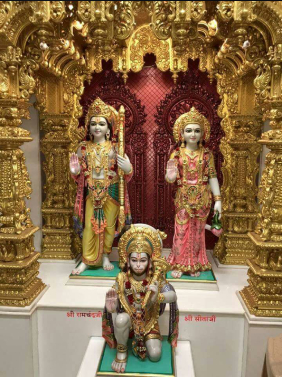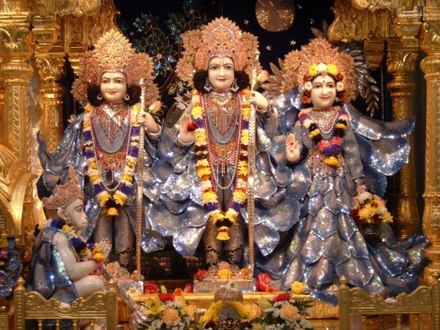

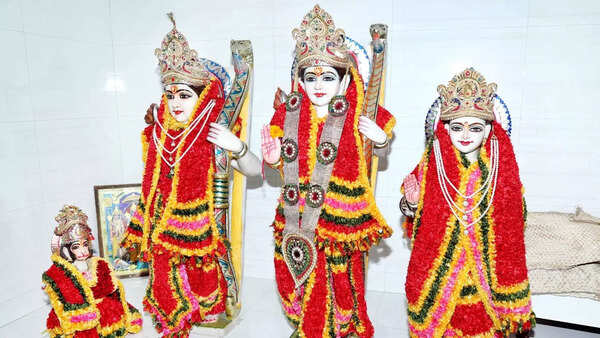
This powerful composition by the great saint-poet Tulsidas represents a deeply personal appeal to Lord Rama for protection against the corrupting influences of Kali Yuga (the age of darkness). The poem beautifully blends devotion, vulnerability, and faith, showcasing the timeless relationship between devotee and divine.
Verse 1
करिय सँभार, कोसलराय!
और ठौर न और गति, अवलंब नाम बिहाय ॥ १ ॥
Kariya sambhāra, kosalarāya! Aura ṭhaura na aura gati, avalamba nāma bihāya ॥ 1 ॥
O King of Kosala! Please protect me. Except for Your name, I have no other refuge or support anywhere.
Verse 2
बूझि अपनी आपनो हितु आप बाप न माय।
राम! राउर नाम गुर,सुर,स्वामि,सखा,सहाय ॥ २ ॥
Būjhi apanī āpano hitu āpa bāpa na māya Rāma! Rāura nāma gura, sura, svāmi, sakhā, sahāya ॥ 2 ॥
Understanding on Your own, You bestow welfare upon Your servants that even parents cannot provide. O Rama! Your name itself is my guru, deity, master, friend, and helper.
Verse 3
रामराज न चले मानस-मलिनके छल छाय।
कोप तेहि कलिकाल कायर मुएहि घालत घाय ॥ ३ ॥
Rāmarāja na cale mānasa-malinake chala chāya Kopa tehi kalikāla kāyara muehi ghālata ghāya ॥ 3 ॥
In Your Rama-Rajya (kingdom), even the shadow of the deceit of those with impure minds (Kali Yuga) cannot prevail. Yet this cowardly Kali Yuga, in its rage, wounds even one who is already dead (like me).
Verse 4
लेत केहरिको बयर ज्यों भैक हनि गोमाय।
त्योंहि राम-गुलाम जानि निकाम देत कुदाय ॥ ४ ॥
Leta kehariko bayara jyoṁ bhaika hani gomāya Tyoṁhi rāma-gulāma jāni nikāma deta kudāya ॥ 4 ॥
Just as a jackal kills a frog to take revenge against a lion, similarly, knowing me as Your servant, Kali Yuga strikes me viciously without purpose.
Verse 5
अकनि याके कपट-करतब, अमित अनय-अपाय।
सुखि हरिपुर बसत होत परीछितहि पछिताय ॥ ५ ॥
Akani yāke kapaṭa-karataba, amita anaya-apāya Sukhi haripura basata hota parīchitahi pachitāya ॥ 5 ॥
Hearing of its deceitful deeds, countless injustices, and obstacles, even King Parikshit, dwelling happily in the Lord’s abode, feels regret (for having spared Kali).
Verse 6
कृपासिंधु! बिलोकिये, जन-मनकी साँसति साय।
सरन आयो, देव! दीनदयालु! देखन पाय ॥ ६ ॥
Kṛpāsindhu! Bilokiye, jana-manakī sāṁsati sāya Sarana āyo, deva! Dīnadayālu! Dekhana pāya ॥ 6 ॥
O Ocean of Mercy! Please cast Your compassionate glance to ease the suffering of this servant’s mind. O Merciful to the meek! O Lord! I have come to Your shelter to behold Your feet.
Verse 7
निकट बोलि न बरजिये, बलि जाउँ, हनिय न हाय।
देखिहैं हनुमान गोमुख नाहरनिके न्याय ॥ ७ ॥
Nikaṭa boli na barajiye, bali jāuṁ, haniya na hāya Dekhihaiṁ hanumāna gomukha nāharaniké nyāya ॥ 7 ॥
If You do not wish to call Kali near and stop him, or don’t want to strike him down, hearing his cries, then I sincerely offer myself to you. Just give a signal to Hanuman ji, and he will look at Kali the way a lion looks at the face of a cow.
Verse 8
अरुन मुख, भ्रू बिकट, पिंगल नयन रोष-कषाय।
बीर सुमिरि समीरको घटिहै चपल चित चाय ॥ ८ ॥
Aruna mukha, bhrū bikaṭa, piṅgala nayana roṣa-kaṣāya Bīra sumiri samīrako ghaṭihaiṁ chapala cita chāya ॥ 8 ॥
When Hanuman ji makes his face red, eyebrows fierce, and yellow eyes crimson with rage, remembering this brave son of the Wind God, all the enthusiasm of this restless-minded Kali will vanish.
Verse 9
बिनय सुनि बिहँसे अनुजसों बचनके कहि भाय।
'भली कही' कह्यो लषन हूँ हँसि,बने सकल बनाय ॥ ९ ॥
Binaya suni bihāṁse anujasōṁ bachanake kahi bhāya ‘Bhalī kahī’ kahyo laṣana hūṁ hāṁsi, bane sakala banāya ॥ 9 ॥
Hearing this humble prayer, Lord Rama smiled and explained its essence to His younger brother. Lakshmana also smiled and said, “He speaks well!” Thus, all my efforts succeeded.
Verse 10
दई दीनहिं दादि, सो सुनि सुजन-सदन बधाय।
मिटे संकट-सोच, पोच-प्रपंच, पाप-निकाय ॥ १० ॥
Daī dīnahi dādi, so suni sujana-sadana badhāya Miṭe saṅkaṭa-socha, pocha-prapañcha, pāpa-nikāya ॥ 10 ॥
The Lord granted justice to this poor soul. Hearing this, celebrations erupted in the homes of saints. All troubles, worries, deceit, and multitudes of sins were destroyed.
Verse 11
पेखि प्रीति-प्रतीति जनपर अगुन अनघ अमाय।
दासतुलसी कहत मुनिगन,'जयति जय उरुगाय' ॥ ११ ॥
Pekhi prīti-pratīti janapara aguna anagha amāya Dāsatulasī kahata munigana, ‘jayati jaya urugāya’ ॥ 11 ॥
Seeing such pure, sinless, and illusion-free love and faith of the attributeless Lord toward His servant, O Tulsidas, the sages proclaimed, “Victory, victory to the Lord of vast glory!”
1. Complete Surrender
Tulsidas ji begins with absolute surrender, declaring that Lord Rama’s name is his only refuge. This represents the pinnacle of bhakti (devotion), where the devotee has no other support.
2. The Nature of Divine Grace
The poet acknowledges that divine grace surpasses even parental love, as it leads to ultimate liberation, something even loving parents cannot provide.
3. The Challenge of Kali Yuga
The composition vividly portrays Kali Yuga as a cowardly force that attacks the devotees of Shri Ram, unable to touch the Lord Himself. This metaphor remains relevant for spiritual seekers facing worldly challenges.
4. Hanuman ji as Protector
The invocation of Hanuman ji as the fierce protector adds another dimension, showing how the devotee can call upon various forms of divine protection while remaining focused on Ram ji.
5. Divine Response
The beautiful conclusion shows Lord Ram’s compassionate response, bringing joy to all saints and destroying all evil influences.
Tulsidas ji employs several poetic devices:
- Metaphors: The jackal-frog-lion imagery brilliantly captures the cowardice of Kali Yuga
- Repetition: The constant invocation of Ram’s name reinforces the central theme
- Emotional progression: From plea to protection to celebration
- Vivid imagery: Hanuman ji’s fierce appearance is described with striking visual detail
Goswami Tulsidas’s prayer is not merely a cry for help but a sophisticated statement wrapped in beautiful poetry. It affirms that in the darkest age (Kali Yuga), the name of Ram and the devotee’s sincere faith remain powerful protectors. The composition ends on a triumphant note; evil is vanquished, the devotee is protected, and the divine glory is celebrated by all sages.
Jai Shri Ram!