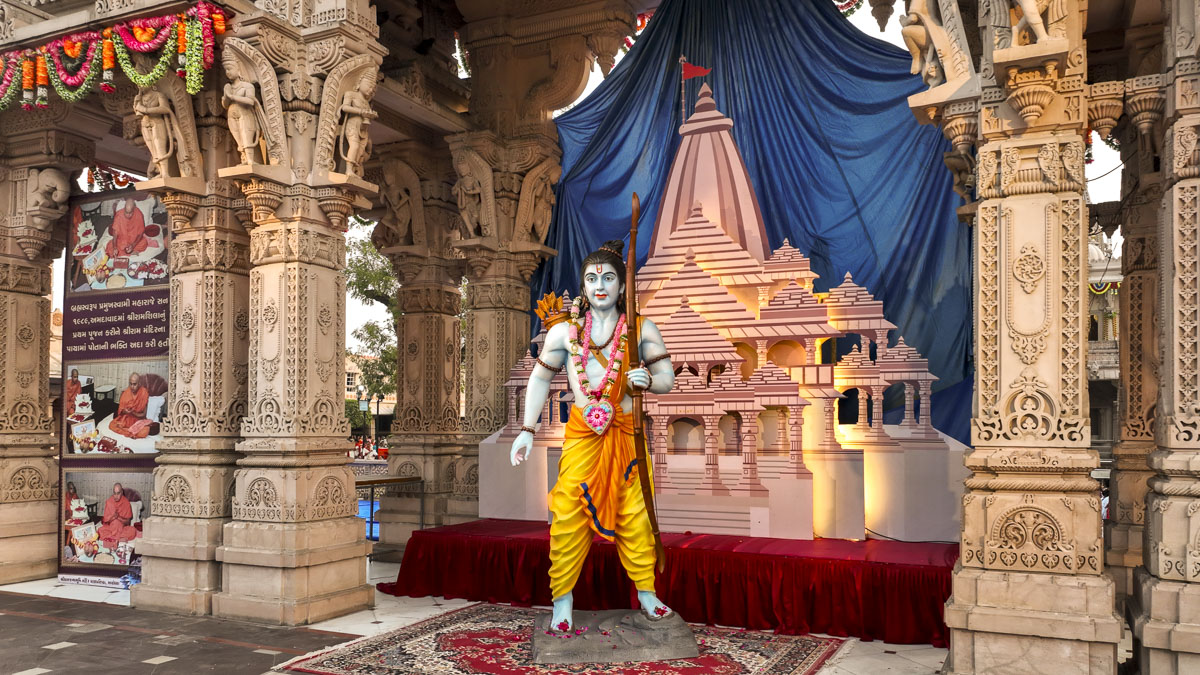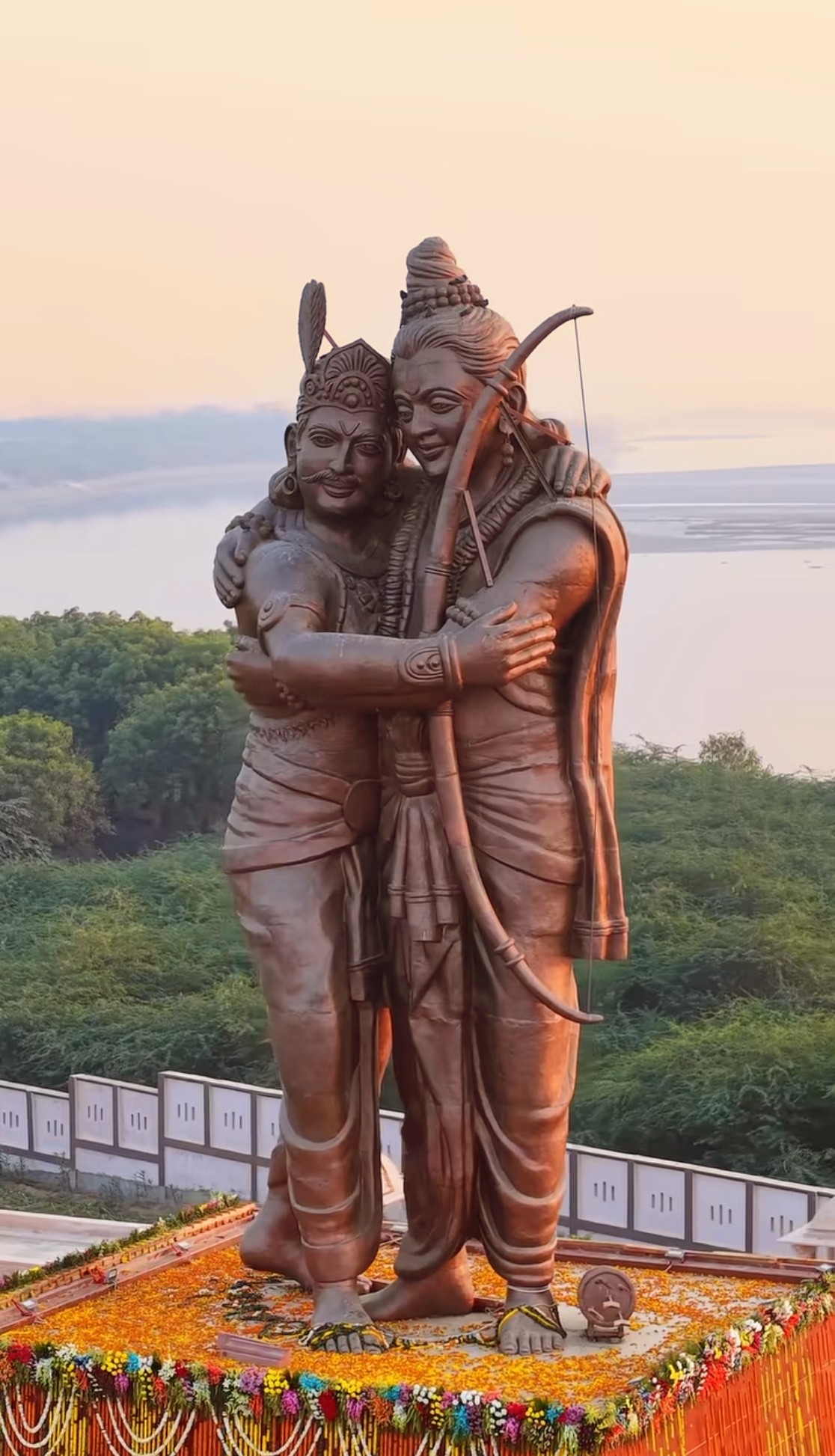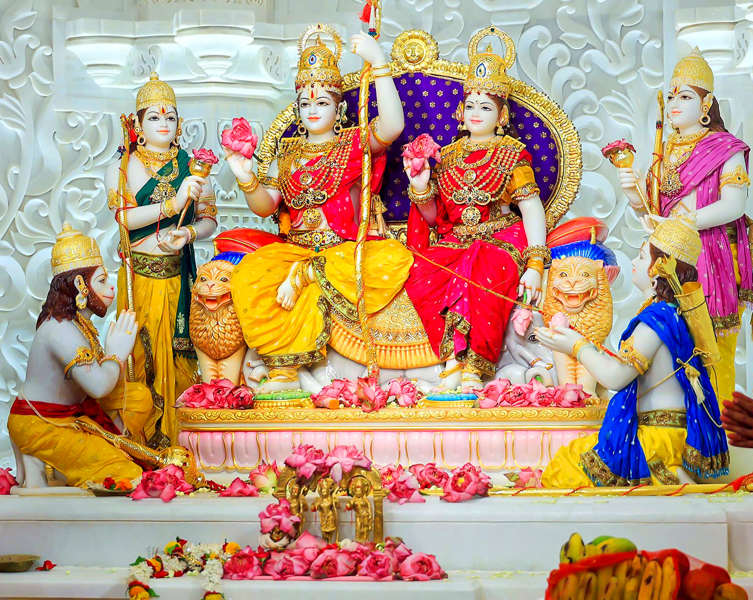

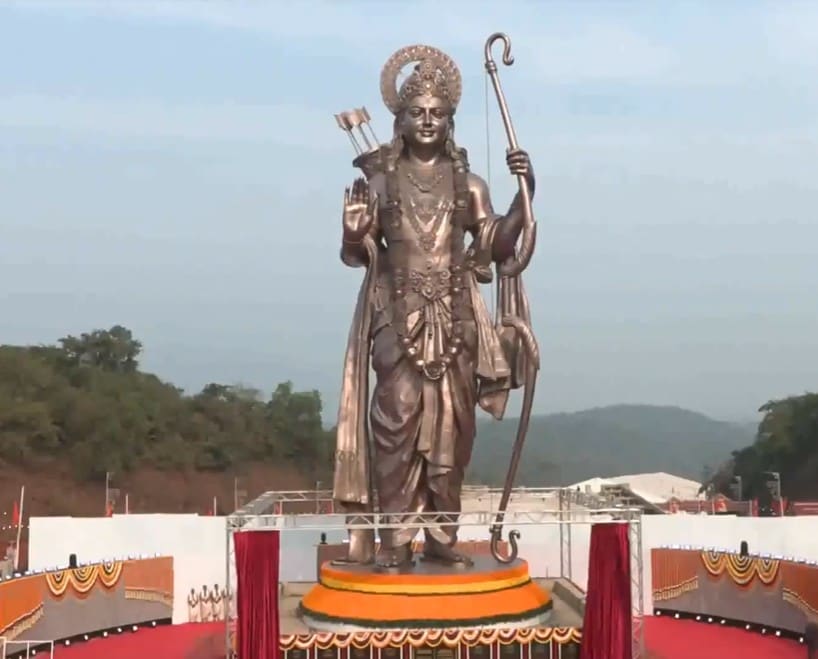
These verses from the Shri Ram Charit Manas encapsulate a fundamental paradox of spirituality: the Supreme Reality is beyond rational comprehension, yet spiritual teachers and scriptures continue to describe it to guide seekers on their path.
“राम अतर्क्य बुद्धि मन बानी। मत हमार अस सुनहि सयानी॥”
Rāma atarkya buddhi mana bānī | mata hamāra asa sunahi sayānī||
“O wise one! Listen to my conviction: Ram cannot be comprehended through intellect, mind, or speech.”
“तदपि संत मुनि बेद पुराना। जस कछु कहहिं स्वमति अनुमाना॥”
Tadapi santa muni beda purana | jasa kachu kahahin swamati anumana ||
“Nevertheless, saints, sages, Vedas, and Puranas speak of Him according to their own understanding and inference.”
The Inadequacy of Logic and Limitations of Intellect in Knowing the Divine
Goswami Tulsidas explains that our primary tools for understanding the world, Buddhi (intellect), Mana (mind), and Bani (speech), are finite. Trying to capture the Infinite (Ram) with a finite mind is like trying to scoop the entire ocean into a small clay pot. Tulsidas ji emphasizes that Ram, the Supreme Brahman, cannot be grasped through human knowledge. Human knowledge operates through three main instruments:
- Buddhi (Intellect) – The discriminative faculty of reasoning
- Mana (Mind) – The emotional and thinking apparatus
- Vani (Speech) – The power of verbal expression
These tools work well in the material world. They can measure, compare, define, and analyze. But the Divine, especially as understood in Vedantic and Bhakti traditions, is not an object within the universe. The Divine is the very ground of existence itself.
Tulsidas ji reminds us that Ram is atarkya, beyond logical reasoning. Logic always depends on premises, categories, and contrasts. Ram, however, is described as the source of all categories, not one item among them.
This teaching aligns with the ancient Vedantic principle that the Ultimate Reality transcends empirical knowledge and logical deduction. The idea that the Ultimate Reality is beyond words is a recurring theme across Vedic and Upanishadic literature.
Kena Upanishad (1.3-4) states:
“यस्य अमतं तस्य मतं मतं यस्य न वेद सः।
अविज्ञातं विजानतां विज्ञातमविजानताम्॥”
“He who thinks he knows It, knows It not. He who thinks he knows It not, truly knows It. It is unknown to those who think they know, and known to those who know they do not know.”
Kena Upanishad (1.3)
“Na tatra chakshur gachhati na vag gachhati no manah…” “The eye does not go there, nor speech, nor the mind. We do not know It; we do not understand how one can teach It.”
Taittiriya Upanishad (2.9) declares:
“यतो वाचो निवर्तन्ते अप्राप्य मनसा सह”
“From which speech turns back along with the mind, unable to reach It.”
The Upanishad clearly states that both speech and mind fall short when attempting to describe or comprehend Brahman.
Mundaka Upanishad (3.1.8) affirms:
“नायमात्मा प्रवचनेन लभ्यो न मेधया न बहुना श्रुतेन”
“This Self cannot be attained through discourse, nor through intellect, nor through much learning.”
Bhagavad Gita (Chapter 12, Verse 3)
Shri Krishna describes the Impersonal Brahman as:
“Aksharam anirdeshyam avyaktam…” “The imperishable, the undefinable, the unmanifest, the omnipresent, the unthinkable…”
Why Then Do Saints and Scriptures Speak?
If Supreme reality is truly beyond description, why do saints, sages, Vedas, and Puranas continue to speak about Him? Tulsidas ji does not dismiss the Vedas, Puranas, or saints. In fact, he honors them deeply. He clarifies what kind of truth they offer. The descriptions provided by the saints act as skillful means.
- The Vedas provide the structural truth. (abstractions)
- The Upanishads use negation (neti neti — “not this, not this”).
- The Puranas provide the emotional connection that conveys spiritual truths through Khathas (stories)
- The Saints provide the living testimony.
- The Bhakti saints sing in love and surrender
By listening to their “estimations” (Anumāna), our minds are purified. Eventually, we move from intellectual understanding (which fails) to direct experience (which succeeds).
They do not define Ram.
They point toward Ram.
Scriptures are not photographs of truth; they are maps. Each sage speaks from a particular angle, using metaphors, stories, symbols, and emotions suited to different seekers.
Individual Perspectives
Each sage, despite being enlightened, expresses the inexpressible through their unique perspective, cultural context, and intellectual framework. This explains the beautiful diversity within Indian philosophy, from Advaita to Dvaita, from Shaivism to Vaishnavism, etc.
Rig Veda (1.164.46) celebrates this pluralism:
“एकं सद्विप्रा बहुधा वदन्ति”
“Truth is One; the wise speak of it in various ways.”
Chandogya Upanishad (6.1.4-6) uses the famous analogy of clay and its products to explain Brahman, all modifications are merely names and forms, while the underlying reality is One.
The deepest implication of this verse is that Ram is to be lived, not solved.
Just as sweetness cannot be understood by chemistry alone, the Divine cannot be grasped by intellectual description alone. It must be experienced through devotion, surrender, and inner transformation.
Saints speak not because they have captured Shri Ram fully, but because they have touched something real, and love compels expression, even when words fall short.
Bhagavad Gita (18.55)
“Bhaktyā mām abhijānāti yāvān yaś cāsmi tattvataḥ”
Only through devotion can one truly know Me as I am.
hari byāpaka sarbatra samānā | prema teṃ pragaṭa hohiṃ maiṃ jānā ||
desa kāla disi bidisihu māhīṃ | kahahu so kahāṃ jahāṃ prabhu nāhīṃ ||
Balkand Shri Ram Charit Manas
“The Lord is omnipresent and pervades everywhere equally; I have realized that He is revealed only through the power of Love. Across every land, every moment, every direction, and every corner of space, tell me, where is that place where the Lord does not exist?”
Knowledge here is not intellectual mastery but relational knowing, knowing through love.
Understanding that Ram is beyond reason doesn’t lead to nihilism or agnosticism. Rather, it:
Recognizing the limits of rational knowledge prevents spiritual arrogance and keeps us open to deeper realization.
Since concepts cannot capture Reality, spiritual practice (sadhana) becomes essential, meditation, devotion, and self-inquiry lead where intellect cannot.
Svetasvatara Upanishad (1.11) states:
“ध्यानयोगानुगता अपश्यन्”
“Through meditation and yoga, they perceived [the Divine Reality].”
Understanding that each teacher speaks from their unique realization helps us appreciate diverse spiritual traditions without getting caught in sectarian conflicts.
While scriptural study (svadhyaya) is valuable, it must be balanced with contemplation (manana) and meditation (nididhyasana) to transcend conceptual knowledge.
If Ram cannot be known through intellect, how is He known? The scriptures point to a different kind of knowing:
Aparoksha Anubhuti – Direct Realization
This is immediate, non-conceptual awareness that transcends subject-object duality. It’s not knowledge ABOUT the Divine, but knowledge AS the Divine.
Mandukya Upanishad (7) describes this state:
“नान्तःप्रज्ञं न बहिष्प्रज्ञं नोभयतःप्रज्ञम्”
“Neither inward-turned awareness nor outward-turned awareness, nor both…”
This describes the transcendent consciousness that is the true nature of Atman-Brahman.
The Grace Factor
Many devotional traditions emphasize that ultimate knowledge comes through divine grace (kripa) rather than personal effort alone.
Katha Upanishad (1.2.23) declares:
“नायमात्मा बलहीनेन लभ्यो”
“This Self cannot be attained by the weak.”
But also:
“यमेवैष वृणुते तेन लभ्यः”
“Whomsoever this Self chooses, by him alone is It attained.”
Reconciling Devotion and Philosophy
Goswami Tulsidas’s verse beautifully bridges bhakti (devotion) and jnana (knowledge). While Ram transcends comprehension, the devotee’s heart can experience what the intellect cannot grasp.
Love Transcends Logic
The Bhakti tradition teaches that divine love provides access to Reality in ways that analysis cannot. When the devotee’s heart melts in pure love, the distinction between knower and known dissolves.
Narada Bhakti Sutra (54) states:
“तत्तु विषयत्यागात् सङ्गत्यागाच्च”
“That [supreme love] comes through renunciation of sense objects and attachment.”
The Heart’s Wisdom
The hriday (spiritual heart) possesses a wisdom that surpasses the mind’s understanding. This is why Ramcharitmanas emphasizes feeling and devotion alongside philosophical insight.
Surrender is the bridge between:
knowing about → knowing by being
Surrender is not giving up intelligence, effort, or responsibility.
It is giving up the illusion that the intellect alone can grasp the Infinite.
Bhagavad Gita 18.66
“Sarva-dharmān parityajya mām ekaṁ śaraṇaṁ vraja”
Abandon all rigid frameworks and take refuge in Me alone.
Bhagwan Krishna does not tell Arjuna to stop acting.
He tells him to stop clinging to mental control and ego-authorship.
Surrender means:
Letting go of the demand to be the final authority
Acting fully and thinking clearly.
Living with the Mystery
- Studying the wisdom of saints and scriptures with reverence
- Practicing spiritual disciplines with dedication
- Remaining humble about our understanding
- Opening our hearts to direct experience
- Respecting diverse expressions of the same Reality
As one navigates the spiritual journey, one walks the razor’s edge between knowledge and unknowing, between effort and surrender, between understanding and transcendence. In this sacred tension lies the beauty of the spiritual quest.
All the discussions about Shri Ram, all the analyses of scriptures, all the philosophical debates are ultimately fingers pointing at the moon. The invitation is not to stop telling, but to occasionally look up from our fingers and gaze directly at that luminous moon of Divine Reality.
“ॐ तत् सत्” – That is Truth.