

Narada Bhakti Sutra 41
तस्मिस्तज्जने भेदाभावात्॥ ४१॥
Tasmistajjane bhedābhāvāt
Translation: “Because there is no difference (bheda-abhāva) between God (tasmin) and His devotee (taj-jane).”
What Does “Non-Difference” Mean?
This sutra presents one of the most profound truths in bhakti philosophy: the ultimate non-duality between the lover and the Beloved, between the devotee and God.
This is NOT the same as Advaita Vedanta’s absolute non-duality, where individual identity is completely dissolved. In bhakti, the non-difference refers to:
- Unity of essence – Both share the same divine nature
- Unity of will – The devotee’s will becomes one with God’s will
- Unity of consciousness – The devotee sees only God everywhere
- Unity of love – There is no separation in the flow of love
Yet, paradoxically, the relationship continues, the sweet dynamic between devotee and Divine is preserved eternally.
The Nature of This Non-Difference
1. In Essence (Tattva)
At the deepest level, the devotee and God share the same essential nature; both are consciousness, both are bliss (ananda). The devotee realizes: “I am not separate from the Divine in my true nature.”
Example: Like waves and the ocean, the wave is not different from the ocean in essence (both are water), yet maintains its form to dance on the ocean’s surface.
2. In Love (Prem)
When divine love reaches its culmination, the boundaries between lover and beloved become transparent. The devotee feels what God feels, loves what God loves, wants what God wants.
Meera Bai’s experience: She said, “There is only Giridhar Gopal, no other exists,” meaning her consciousness was so filled with Shri Krishna that there was no space for anything else, no sense of separation.
3. In Will (Sankalp)
The devotee’s personal will merges with divine will. They no longer desire anything for themselves. their only desire is God’s happiness and the fulfillment of divine purpose.
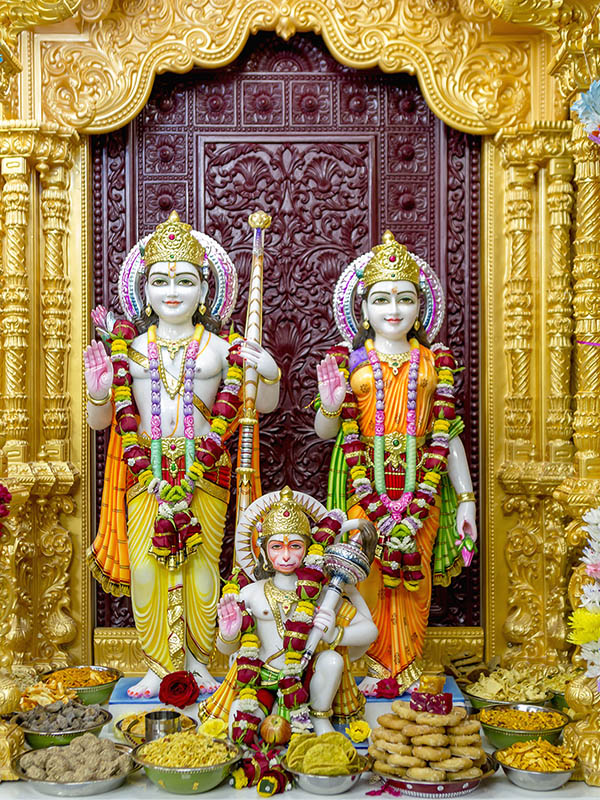
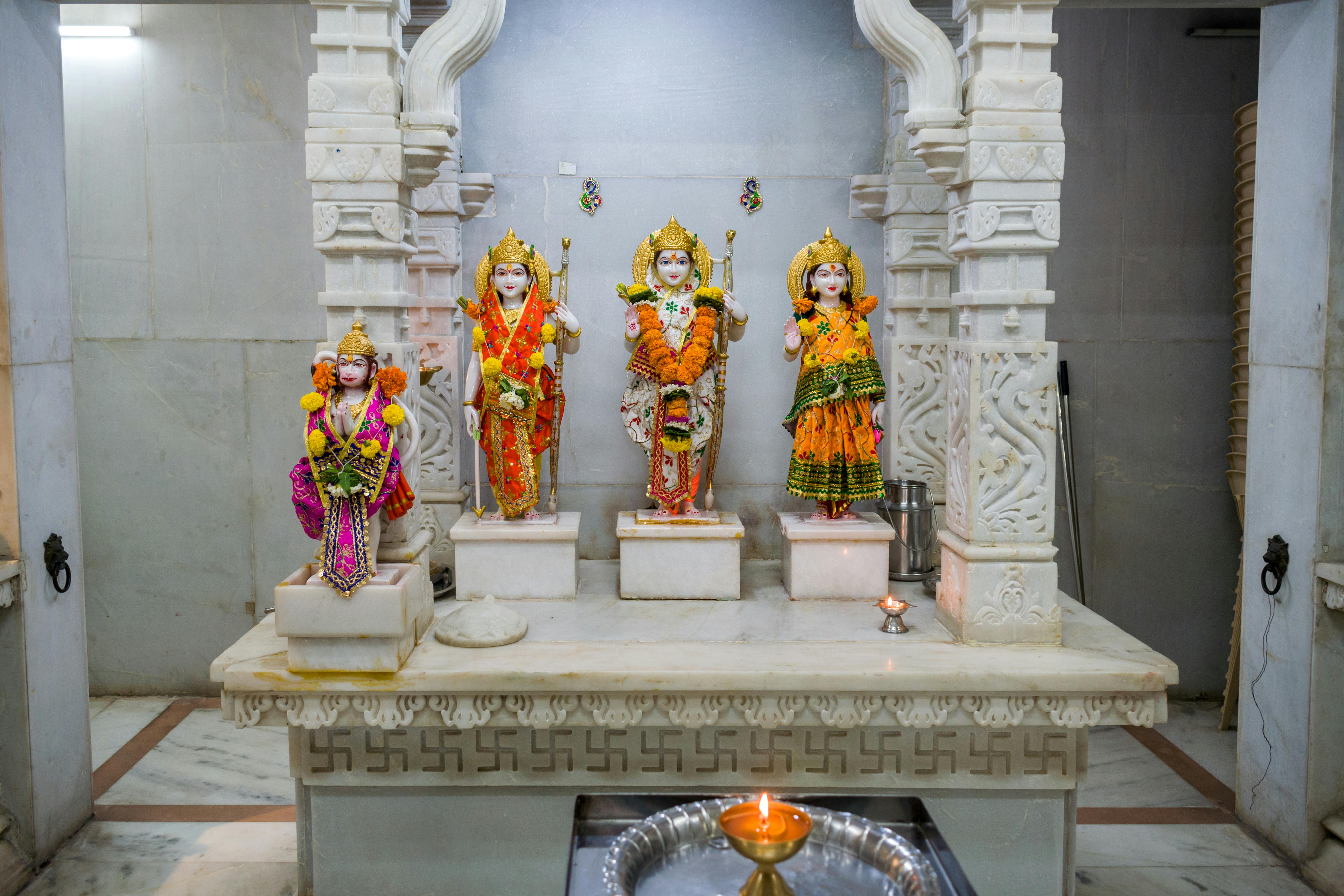
Hanuman ji’s example: He had no separate will from Bhagwan Ram. Whatever Shri Ram wanted became Hanuman’s only desire. This is bheda-abhava (non-difference).
4. In Action (Karma)
The devotee becomes an instrument (nimitta) of the Divine. Their actions are no longer “theirs” but flow through them as expressions of divine will.
Bhagavad Gita parallel: Shri Krishna tells Arjun, “You are merely an instrument”, the real doer is always the Divine.
Why Is There No Difference?
Reason 1: The Nature of Pure Love
Pure love naturally creates unity. Just as in worldly love, lovers say “we have become one,” in divine love this unity is complete and permanent.
When two people deeply love each other, they often say:
- “You complete me”
- “I cannot imagine life without you”
- “Where you go, I go”
In divine love, this becomes absolute reality, not just poetic expression.
Reason 2: God Dwelling in the Heart
The Bhagavad Gita states that God dwells in the hearts of all beings. But in the devotee’s heart, there are no veils; God is fully revealed, fully present, fully experienced.
The devotee discovers: “The God I was seeking outside was always within me.”
“I treat all living beings the same; I am not against or in favor of anyone. Yet, the devotees who love and worship Me dwell in Me, and I dwell in them.”
Bhagavad Gita: Chapter 9, Verse 29
Reason 3: Complete Surrender (Sharanagati)
When the devotee completely surrenders:
- The ego dissolves
- Personal identity merges with divine identity
- “I” and “Thou” remain as forms of relationship, but without real separation
Surrender creates union, like salt dissolving in water becomes one with the water.
Reason 4: Divine Grace
This non-difference is ultimately achieved through divine grace (kripa). God Himself removes the veil of separation and reveals: “You were never separate from Me.”
The Paradox: Unity Yet Relationship
The Beautiful Mystery
This is where bhakti differs from pure Advaita:
Advaita says: The individual self (jiva) merges completely into Brahman, like a drop into the ocean. The drop loses its individuality.
Bhakti says: The devotee becomes one with God in essence, yet maintains individual personality for the eternal enjoyment of a loving relationship.
Why Preserve the Relationship?
Because love requires two lovers and a beloved. If a complete merger happened, who would love whom?
- Radha and Krishna – They are one in essence, yet remain eternally separate to enjoy the sweetness of divine love
- Meera and Giridhar – Meera doesn’t want to merge and lose herself; she wants to eternally love Krishna
- Chaitanya Mahaprabhu’s philosophy – “Acintya bheda-abheda” (inconceivable simultaneous oneness and difference)
The Sweetness of This State
Imagine:
- Complete union – no loneliness, no separation
- Yet eternal relationship – the joy of loving and being loved continues forever
- This is the ultimate state, sweeter than even liberation (moksha)
Practical Implications
1. The Devotee Sees God Everywhere
When there’s no difference between God and devotee in consciousness, the devotee naturally sees God in all beings, all situations.
Saint Tukaram’s experience: He would bow to everyone, saying “I see my Lord in you.”
2. No Fear or Anxiety
If I am one with God, what is there to fear? Death becomes merely a transition, suffering becomes a form of divine play (lila).
Meera drank poison fearlessly because she knew she and Krishna were one; how could poison harm that unity?
3. All Actions Become Worship
When the devotee realizes non-difference, every action becomes an offering to the Divine. Working becomes worship, eating becomes yajna, sleeping becomes meditation.
Karma Yoga perfected: This is the highest karma yoga where the doer realizes “I am not the doer, God does everything through me.”
4. Natural Compassion Arises
Seeing God in all beings naturally leads to universal compassion. Hurting another becomes impossible because it means hurting one’s own Self.
Practical service: True saints serve all beings because they see no difference between themselves, others, and God.
Different Levels of Non-Difference
Stage 1: Intellectual Understanding
“I understand philosophically that God and I are one.”
This is knowledge (jnana) but not experience.
Stage 2: Occasional Experience
During deep meditation or devotional practice, moments of unity occur where the sense of separation temporarily dissolves.
“Sometimes I feel completely merged with the Divine.”
Stage 3: Constant Awareness
The sense of non-difference becomes the background consciousness through all activities.
“I always feel God’s presence within me, as me, yet beyond me.”
Stage 4: Complete Realization
The ultimate state where there’s no moment of feeling separate from the Divine. This is the fruit of perfected bhakti.
“Where is the question of separation? There is only One, appearing as many.”
Supporting Concepts from Other Texts
Bhagavad Gita’s Teaching
“Mayi sarvam idam protam” – “All this is strung on Me like pearls on a thread.”
Everything is in God, God is in everything. The devotee realizes this truth experientially.
“Yo mam pasyati sarvatra” – “One who sees Me everywhere and sees everything in Me, I am never lost to him, nor is he lost to Me.”
This is the vision of non-difference.
Upanishadic Wisdom
“Tat tvam asi” – “That thou art”
The same truth: what you seek outside is your own Self.
“Ayam atma Brahma” – “This Self is Brahman”
Your true self is not different from the ultimate reality.
The Key Difference
While Advaita uses these statements to say “only Brahman exists, the individual is illusion,” bhakti interprets them as “the individual realizes their divine nature while maintaining a loving relationship with the personal God.”
Misconceptions
“I become God”
You don’t become God in the sense of having God’s powers or replacing God. Rather, you realize your eternal relationship with God is so intimate that separation is illusory.
“There’s no difference, so worship is unnecessary”
The non-difference is realized THROUGH worship and devotion, not by abandoning them. Even after realization, worship continues as the natural expression of love.
“Everyone is already one with God, so no effort needed.”
While this is true in essence, the experiential realization requires spiritual practice, grace, and purification. Potential unity must become actual unity.
The Practical Path to This Realization
1. Constant Remembrance (Smarana)
Keep remembering God throughout the day. This gradually dissolves the sense of separation.
2. Surrender (Sharanagati)
Progressively surrender more of your life, will, and identity to the Divine.
3. Service (Seva)
Serve all beings as forms of God. This practice reveals the unity underlying apparent diversity.
4. Study (Svadhyaya)
Study the lives and teachings of saints who realized this non-difference.
5. Grace (Kripa)
Ultimately, this realization is a gift. Pray for divine grace to remove the veil of separation.
Conclusion: The Sweet Non-Duality of Love
This sutra reveals the ultimate destination of the bhakti path: a state where there is no separation between devotee and God, yet the relationship continues eternally.
This is not the cold, impersonal non-duality of pure philosophy, but the warm, intimate non-duality of love, where two have become one while remaining two, where union is complete yet relationship is eternal.
The devotee can say:
- “I am not different from my Beloved” (unity)
- “Yet I eternally love my Beloved” (relationship)
Both statements are simultaneously and paradoxically true. This is the mystery and the glory of divine love.